
Spray-On Roofing Systems: Costs, Benefits & Installation Guide
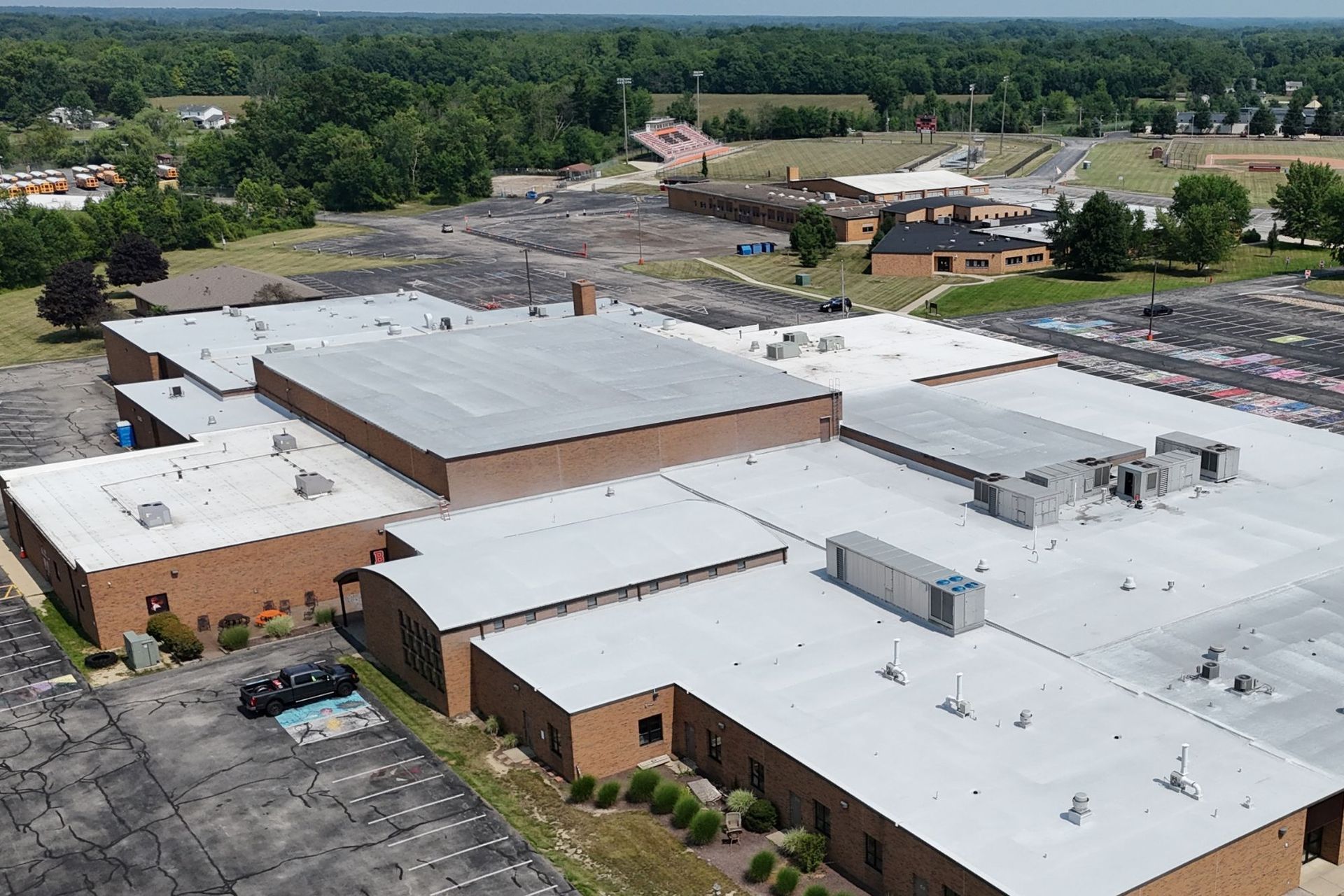
Quick Answers: There are two spray-on roofing systems: spray polyurethane foam and roof coatings. Spray foam roughly costs $5-$10 per sq. ft. Roof coating systems roughly cost $3.50-$7 per sq. ft. The biggest benefit is that each system is seamless and fastener-free, which eliminates the most common ways roofs leak. Each is installed through a hose and spray gun. There are videos of each system’s installation at the end of the article.
In this article, you’ll learn:
- A quick overview of the two spray-on commercial roofing systems
- What factors make the cost go up or down
- Key benefits of each system
- And watch a video of what an actual installation looks like
And just in case you were skeptical about who wrote this article, West Roofing Systems has been installing ONLY spray-on roofing systems since 1979. We don’t install TPO, EPDM, PVC, Built-ups, etc.
And…this article has been read, edited, and approved for publishing by our President, Chris West (more than 30 years of spray-on roofing experience)
What are the two spray-on roofing systems?
1. Spray Polyurethane Foam
2. Roof Coating Systems
Spray polyurethane foam (also known as SPF) combines an isocyanate (A side) and a polyol resin (B side). These are known as the “A” and “B” sides of SPF roofing.
These are heated and pumped through hoses that run up the side of the building, along the roof, and into a spray gun.
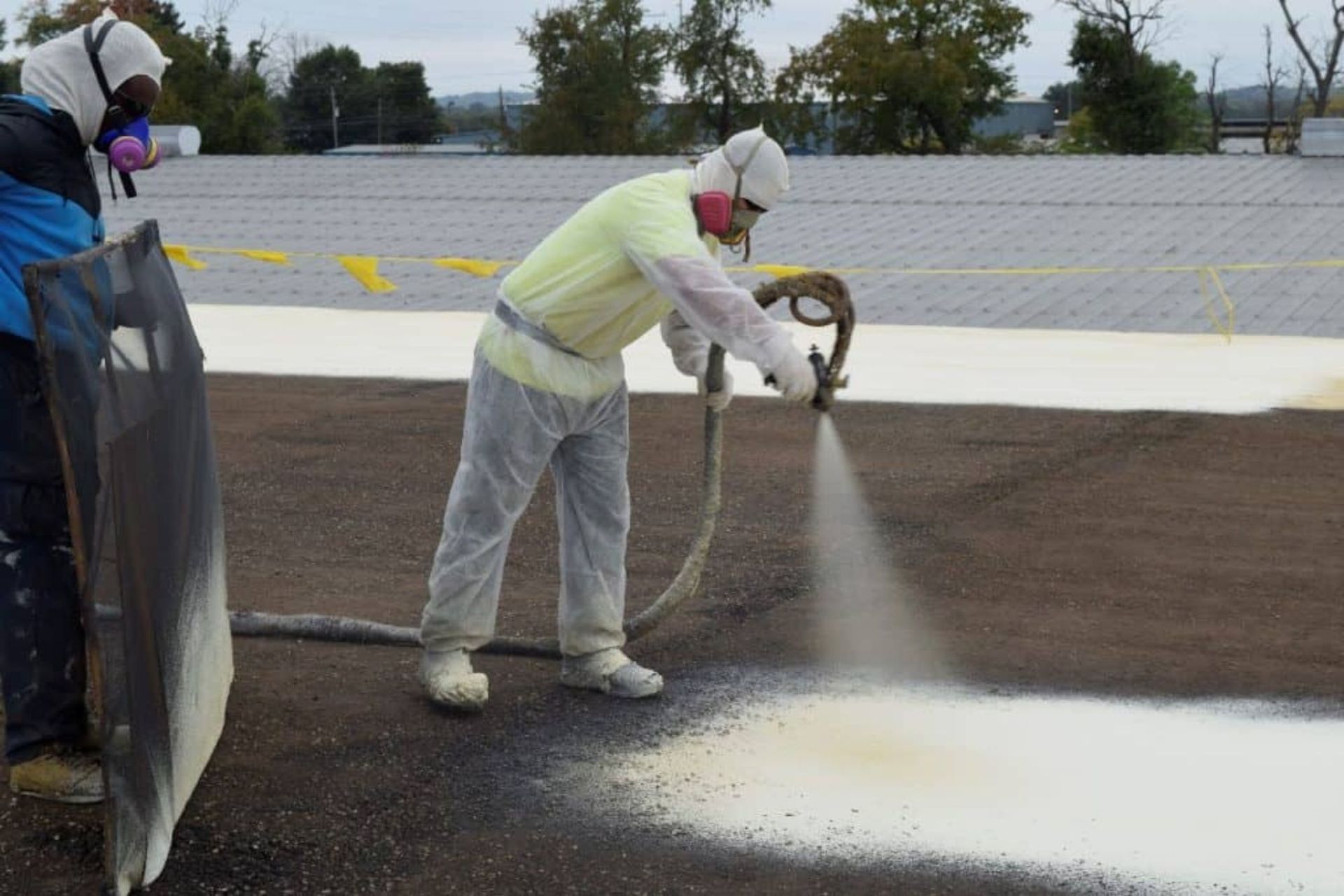
The gun tip is where the “sides” mix, and it sprays a liquid product onto the roof.
The foam rises within seconds and cures enough to walk on in a few minutes. UV rays can damage unprotected foam, so an elastomeric coating (usually silicone, acrylic, or urethane) is installed over the top.
The coating is usually installed in two coats.
Granules can be installed into the topcoat to provide stability and extra strength.
For roof coating systems, 55-gallon drums of coating are pumped from a box truck near the building.
The coating can either be installed via the “snake and roll” method if it’s windy.
Or sprayed from a gun:
What factors increase or decrease the cost of a spray-on roofing system?
Distance between roof and contractor
The farther away they are, the more gas, travel time, and, in some cases, hotel stays can inflate the cost of a roofing project.
NOTE: This shouldn’t be a giant factor in choosing a contractor. Work quality should matter most.
Length of warranty
Both spray-on roofing systems are 99.99% of the time available in 10, 15, or 20-year warranties. The coating thickness determines the warranty. A thicker application uses more material and requires more labor hours, thus costs more, but gets you a longer warranty.
NOTE: It took me about a year after working full-time at West Roofing Systems to realize that the coating that protects SPF roofs... is the exact same coating that gets installed on its own for a coating system. 😊
Amount of wet insulation or bad decking
No roofing system should be installed over wet insulation or bad decking. If a 100,000 sq. ft. roof has 10% wet insulation, it’s a lot more work to remove those areas, transport them to a landfill, and replace them with similar material than it is on a roof with 0% wet insulation.
Thing to watch out for: Contractors can underbid others by installing over wet insulation and bad decking. Contractors can also get businesses to overpay by inflating the amount of tear-off, usually convincing the owner to do a complete tear-off.
Get proof with core samples and/or infrared scans of wet (and dry) insulation before signing off on a project.
What are the benefits of a spray-on roofing system?
Perhaps you’ve read other articles and heard the term “monolithic?”
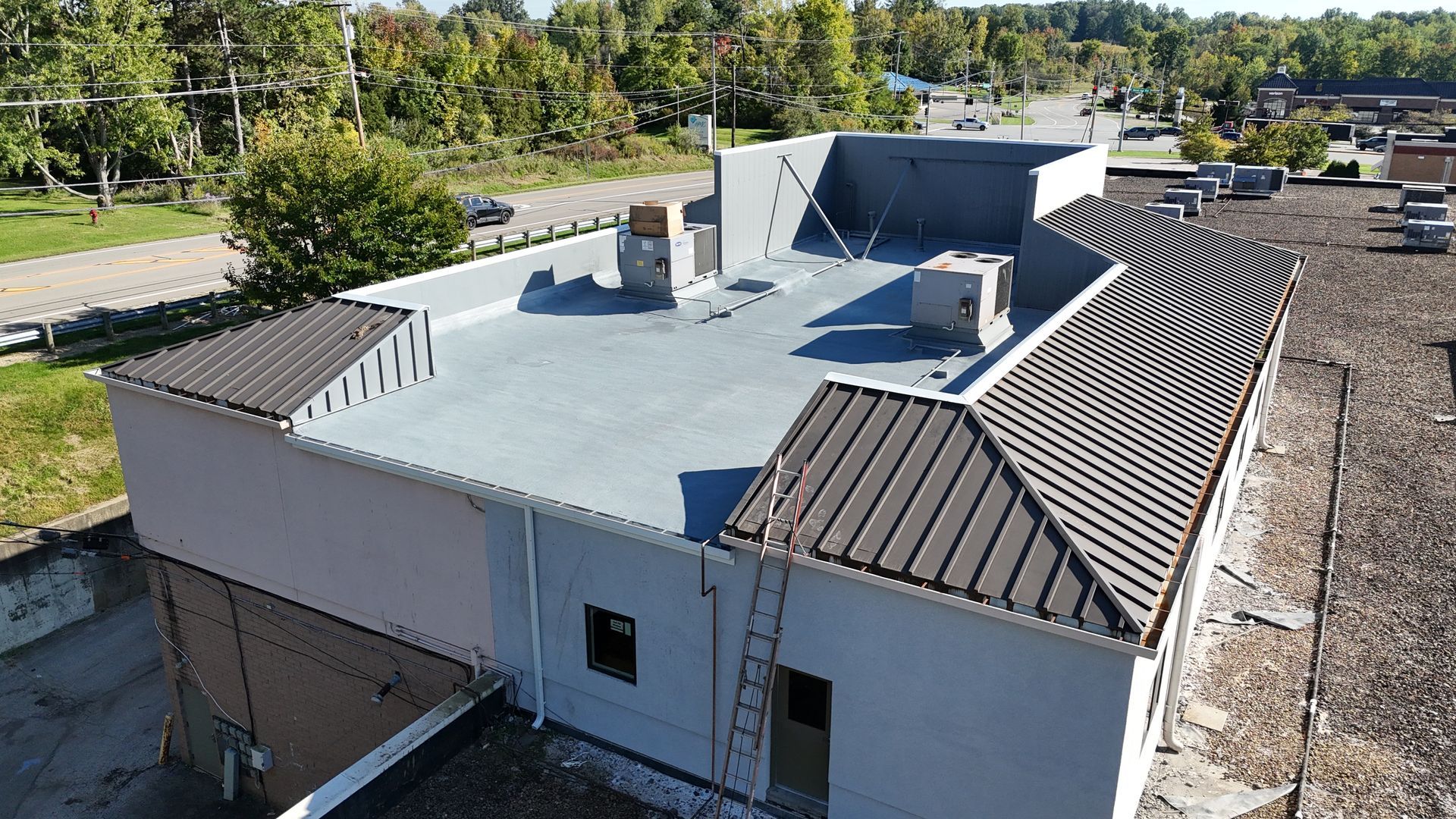
Monolithic means the roof system’s membrane (top layer) is one continuous layer with no seams.
In single-ply systems, an approximately 4-foot-wide roll is rolled right next to another 4-foot-wide roll, and they are heated together, creating a seam between the rolls.
On metal roofs, the panels are fastened together, with metal fasteners installed throughout the roof.
Spray-on roofs are fluid-applied and require no “fusing of material” or fasteners of any kind.
Every drain, curb, pipe, skylight, and other type of penetration that comes through the roof becomes part of the monolithic membrane.
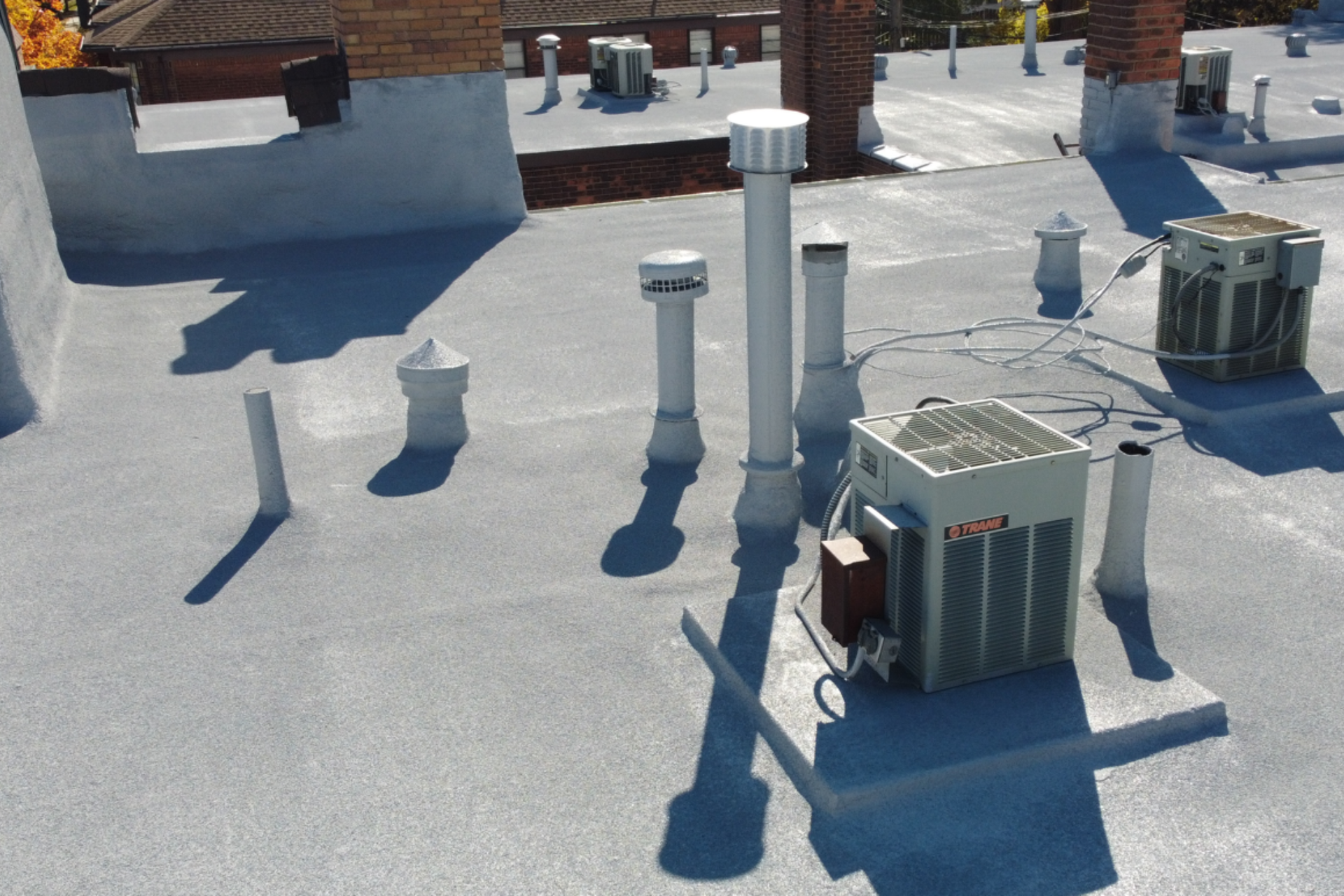
The #1 cause of roof leaks is seams, which expand and contract daily as roof temperatures fluctuate.
This creates a lot of stress on the seams.
Spray-on roofs do not have that problem because the coating is “elastomeric.”
Elastomeric means a material can expand and contract without losing performance. This is sometimes called a material’s “elongation” strength.
Other benefits include:
- Minimal tear-off. Many times, we avoid the complete tear-off and only remove what’s wet
- SPF provides the best insulation (R-value) of any roofing insulation. This lowers energy costs and lowers HVAC workload
- The warranties are renewable
- Maintenance is much easier
- Can easily be installed around penetrations and vertical walls
- Can easily increase slope in any area to eliminate ponding water
- Can easily “tie-in” areas together if areas of tear-off and replacement occur
- It’s very lightweight, approximately 1 lb. per square foot installed
NOTE: There’s a lot of detail about how warranties are renewable, why maintenance is easier on a monolithic roof than one with seams and fasteners, and all the other benefits on this list. Contact us if you're interested, and we’ll be happy to answer any questions.
How are spray-on roofing systems installed?
This is much better explained in a video than in text. Here you go!
Hope you learned at least one new thing today. If you have any questions, please contact us, and we’ll respond as soon as possible.