
Stopping Leaks Before They Escalate
Commercial Roof Repair in LaGrange for leaks, membrane damage, and failing seams on flat roof systems
A ceiling stain or drip during heavy rain signals that water has already penetrated the roof membrane and may be spreading through insulation or pooling on the deck, creating conditions for structural damage and mold growth. West Roofing Systems, Inc. diagnoses and resolves leaks across spray foam, coating, and flat roof systems in LaGrange, identifying failure points that often lie far from where water appears inside. Ponding water, seam separation, storm damage, and fastener back-out each produce distinct leak patterns, and effective repair requires tracing water migration paths rather than simply patching the obvious wet spot.
Common issues include membrane splits from thermal cycling, failed flashing at roof penetrations, open seams where adhesive has degraded, and impact damage from hail or falling debris. On spray foam roofs, coating wear or foam shrinkage can create entry points, while single-ply systems frequently leak at seams and around HVAC equipment where movement stresses the membrane. Fast response limits water intrusion that saturates insulation, damages inventory, or disrupts business operations, with temporary measures stabilizing the situation while permanent repairs are planned and executed.
Request an immediate inspection to locate the source of active leaks and assess whether insulation or deck damage requires attention beyond membrane repair.
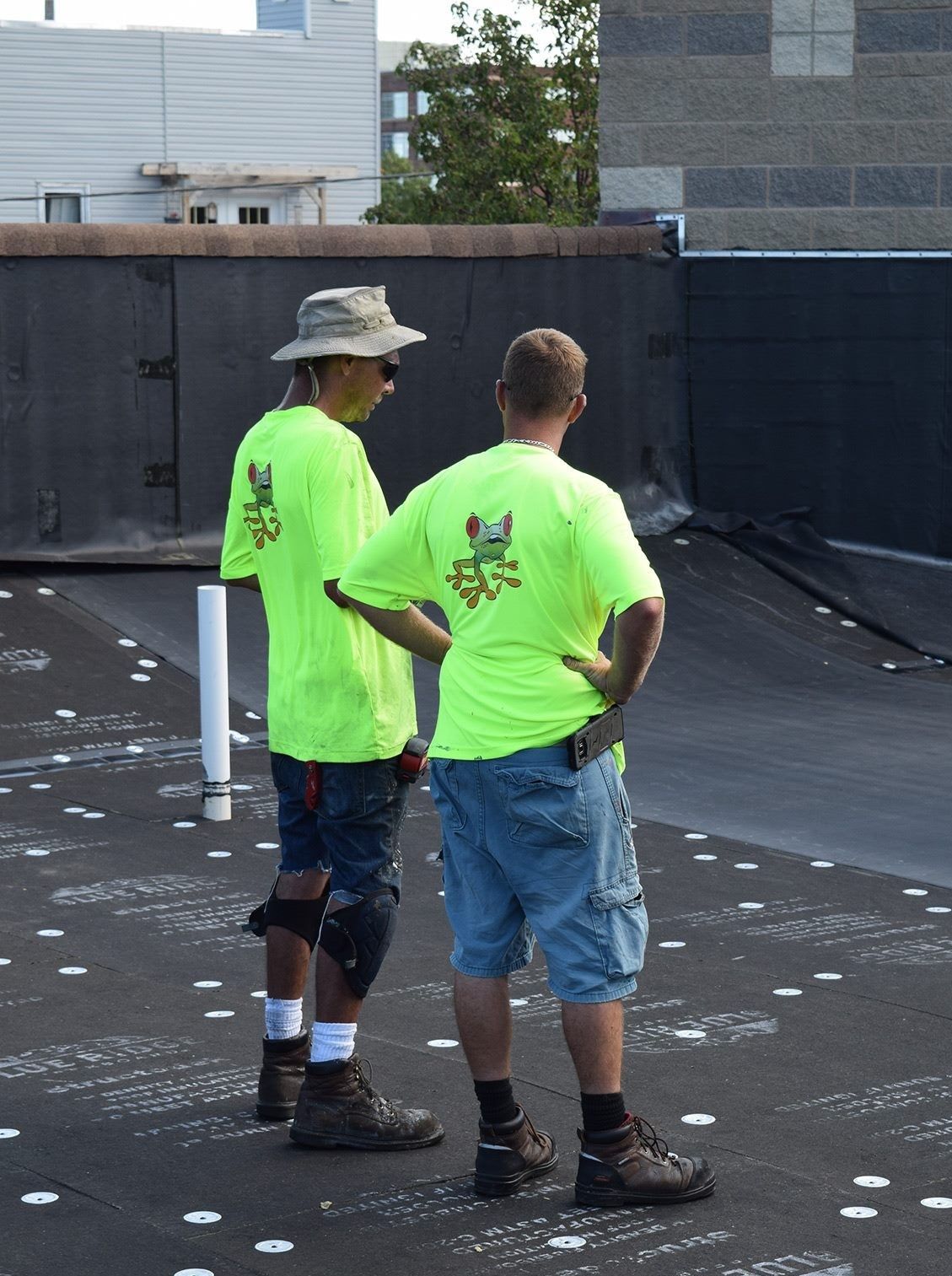

How Repairs Restore Roof Integrity
Repair begins with moisture scanning to identify saturated insulation and mapping leak paths from entry points to interior manifestation. Damaged membrane sections are removed, wet insulation is replaced, and the substrate is dried and prepared for new material application. On spray foam systems, this may involve cutting out compromised foam, filling voids, and recoating; on single-ply roofs, it includes heat-welding new membrane over cleaned and primed areas, ensuring watertight bonds that match the original installation quality.
After repair, ceiling stains stop spreading, interior humidity levels drop as water intrusion ceases, and the patched areas blend with surrounding membrane without raised edges or visible seams that could catch debris or wear prematurely. Facilities that previously placed buckets during storms or rescheduled operations around weather forecasts regain full building use regardless of conditions outside. Addressing leaks promptly prevents the compounding damage that turns a simple membrane patch into a costly section replacement or premature full roof failure.
Repairs function as both reactive solutions to immediate failures and proactive maintenance when minor issues are caught during inspections before they leak. Ponding water that sits for extended periods accelerates membrane aging, so adding drains, adjusting slopes with tapered foam, or installing overflow scuppers often accompanies leak repair to prevent recurrence. West Roofing Systems, Inc. provides repair documentation that includes photos of damage, materials used, and recommendations for preventing similar failures, helping property managers budget for long-term roof health rather than just addressing emergencies as they arise.
What Property Managers Need to Know
Facility managers in Lagrange facing recurring leaks or visible roof damage often question whether repair makes financial sense compared to replacement.
How do you determine whether a roof needs repair or full replacement?
The extent of water damage, percentage of membrane affected, and remaining service life of the existing system guide the decision, with isolated leaks and structurally sound substrates favoring repair, while widespread failure or saturated insulation typically requiring replacement.
What causes seams to fail on commercial flat roofs?
Thermal expansion and contraction stress adhered or welded seams over time, while UV exposure degrades adhesives and membrane flexibility, eventually allowing seams to separate and admit water during wind-driven rain or snow melt.
How quickly can emergency roof repairs be completed after a storm or sudden leak?
Response time depends on weather conditions and crew availability, but temporary waterproofing measures can often be deployed within hours to stop active leaks, with permanent repairs scheduled once conditions allow proper material application and cure.
What should building owners do immediately when they notice a roof leak?
Document the interior location and extent of water intrusion, place temporary containment to protect equipment and inventory, and contact a roofing contractor to trace the source before hidden damage worsens or spreads to adjacent areas.
How does repairing a spray foam roof differ from repairing a single-ply membrane system?
Spray foam repairs involve cutting damaged foam, filling voids with new material, and recoating the area, while single-ply repairs require heat welding or adhesive bonding of patch material, with foam repairs often integrating more seamlessly due to the monolithic nature of the coating layer.
West Roofing Systems, Inc. offers emergency response for active leaks and scheduled repair services for issues identified during routine inspections, with both approaches aimed at extending roof life and avoiding the cost and disruption of premature replacement. Arrange an on-site evaluation to assess current roof condition and prioritize repairs based on risk and budget.