
Data Center Roofing: Insulation, Reliability, and Long-Term Value
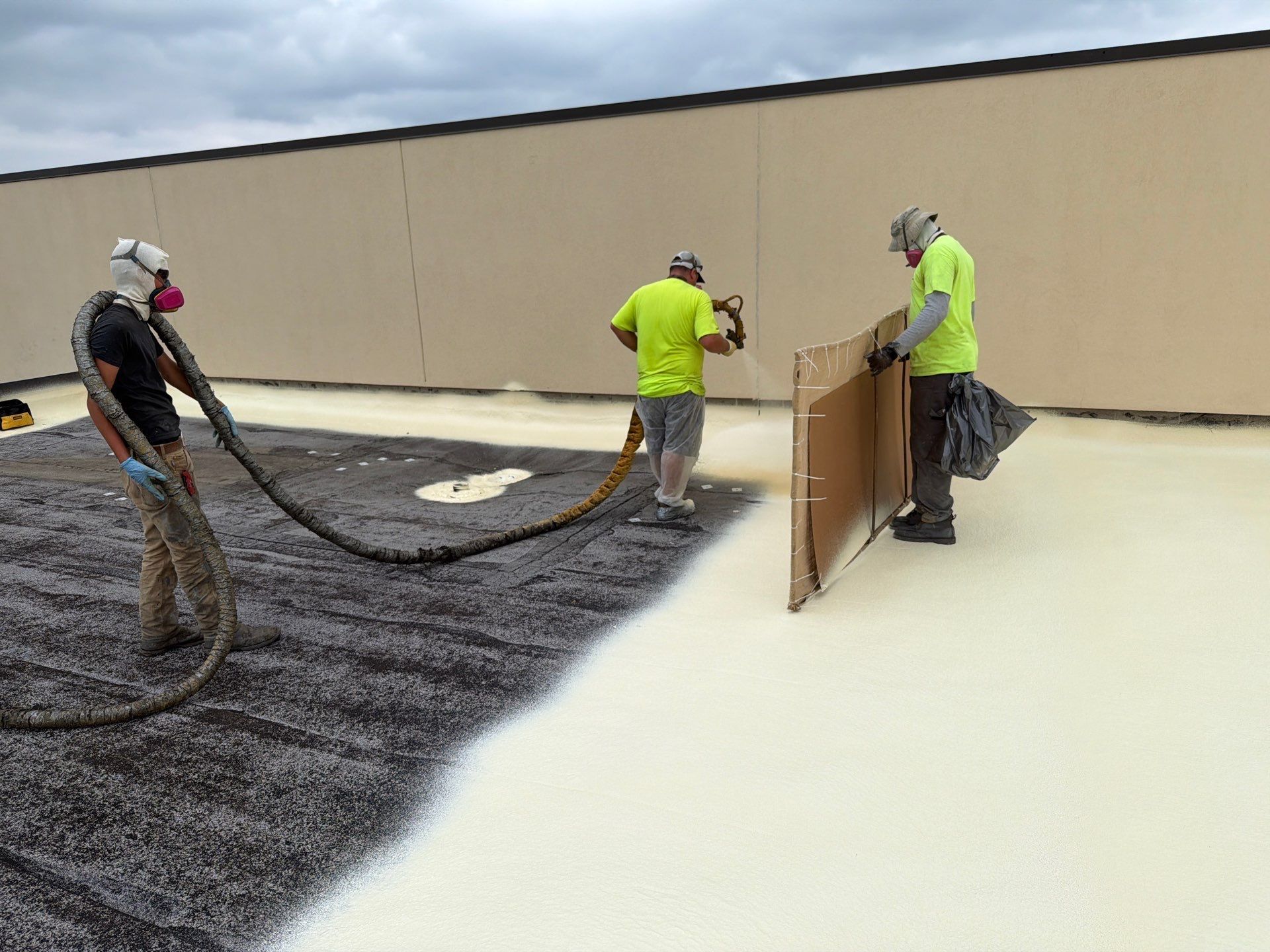
Quick Answer: Data centers need to be igloos. Spray polyurethane foam creates the best igloo.
Data centers operate around the clock, and their servers generate substantial heat. Their cooling systems run continuously to maintain operating temperatures, so roof insulation, waterproofing, and long-term performance matter.
Spray polyurethane foam (SPF) roofing offers several advantages for data center buildings.
1. High R-Value for Better Thermal Performance
SPF provides about R-6.5 per inch, letting contractors install substantial insulation without multiple layers of insulation board.
NOTE: TPO and iso-board can provide the same R-value as spray foam, but you'll need a thicker insulation layer (room for installer error); you'll have to use fasteners (they can back out) and create seams (room for thermal bridging, and they have the most stress on a roof as they expand and contract with the heat changes of the roof)
Higher roof R-values can reduce heat transfer through the roof, helping HVAC systems maintain indoor temperatures.
Actual energy savings depend on the entire building envelope, climate, and cooling system.
2. A Seamless, Waterproof Roof
SPF is spray-applied, creating a continuous insulation and roofing surface without membrane seams.
It also conforms around HVAC units, pipes, curbs, and other roof penetrations.
With proper installation and maintenance, SPF roofing helps protect critical equipment and building interiors from water intrusion.
3. Designed for Long-Term Renewability
Do you think data centers will be around 20, 40, or 60 years from now?
Based on current trends, data centers aren't going away.
Spray foam roofs can be renewed rather than completely replaced. After the existing coating reaches the end of its service life, a contractor can evaluate the foam, make necessary repairs, clean the roof, and apply a new protective coating.
With proper maintenance and suitable conditions, SPF roofs can be renewed repeatedly.
The most common warranties are 10-, 15-, and 20-year.
This can help data center owners extend roof service life while reducing the need for disruptive tear-offs.
4. What About Roof Traffic?
SPF roofing is not the best choice for unrestricted, heavy foot traffic. Data centers may require frequent access to HVAC units and other rooftop equipment.
To address this, contractors can install a double broadcast of granules into the protective coating and create dedicated walkways around equipment.
These measures improve surface protection in designated traffic areas, but they do not make the roof suitable for unlimited traffic.
SPF vs. TPO Roofing for Data Centers
TPO roofing with polyiso insulation can also achieve high R-values. However, insulation attachment, fasteners, membrane seams, and penetrations must be properly designed and installed to manage thermal bridging and prevent water intrusion.
SPF offers a different approach: it applies insulation and roofing as a continuous system that conforms to the roof's contours and penetrations while eliminating membrane seams.
For data center owners, the decision comes down to more than initial installation cost.
Insulation performance, waterproofing, rooftop access, maintenance, and long-term renewability all deserve consideration.