
Spray Foam vs. TPO Roofing: Which Roofing System Is Best?
Quick Answer: TPO is best when there aren't many penetrations, walls, pipes, or other objects that can interfere with its rolled-out installation. The more complex a roof is, the more cost-effective spray foam is compared to TPO.
If your commercial roof is leaking, you're collecting quotes, and comparing options, this article is for you.
Perhaps one contractor recommends a spray polyurethane foam (SPF) roofing system, while another recommends a TPO roofing system.
Both contractors seem confident that their solution is the best choice—but how can two experienced roofing companies recommend completely different systems for the same building?
The truth is that there isn't a single "best" commercial roofing system. The right choice depends on your building, your long-term plans, and what you're trying to accomplish.
This article isn't designed to sell you on one roofing system over another. Instead, our goal is to help you understand the strengths and weaknesses of each option so you can make the best decision for your building.
Whether your roof is leaking today or you're planning for a replacement in the next year, this guide will walk you through the differences between spray foam and TPO roofing systems—including cost, lifespan, energy efficiency, maintenance requirements, leak potential, and the situations where each system performs best.
Spray Foam vs. TPO at a Glance
If you're looking for the short answer, here's a quick comparison before we dive into the details.
| Category | Spray Foam | TPO |
|---|---|---|
| Initial Cost | $5-$10 per sq. ft. | $5-$10 per sq. ft. |
| Energy Efficiency | Excellent | Good |
| Seams | None | Yes |
| Un-complex Roof Layout | Good | Excellent |
| Complex Roof Layout | Excellent | Hard to Install |
| Renewable | Yes | No |
| What Happens End of Life | Recoated | Torn-Off |
| Replacement Cost | $3-$5 per sq. ft. | $5-$10 per sq. ft. |
| Easy to Maintain/Repair | Yes | No |
| Heavy Foot Traffic | Yes, with walk pads | Excellent |
As you can see, neither roofing system wins every category. Some building owners will benefit more from spray foam, while others will be better served with a TPO roofing system.
The rest of this article explains why.
Understanding the Two Roofing Systems
Before comparing them, it's important to understand that these two roofing systems are installed in completely different ways.
What Is a Spray Polyurethane Foam (SPF) Roof?
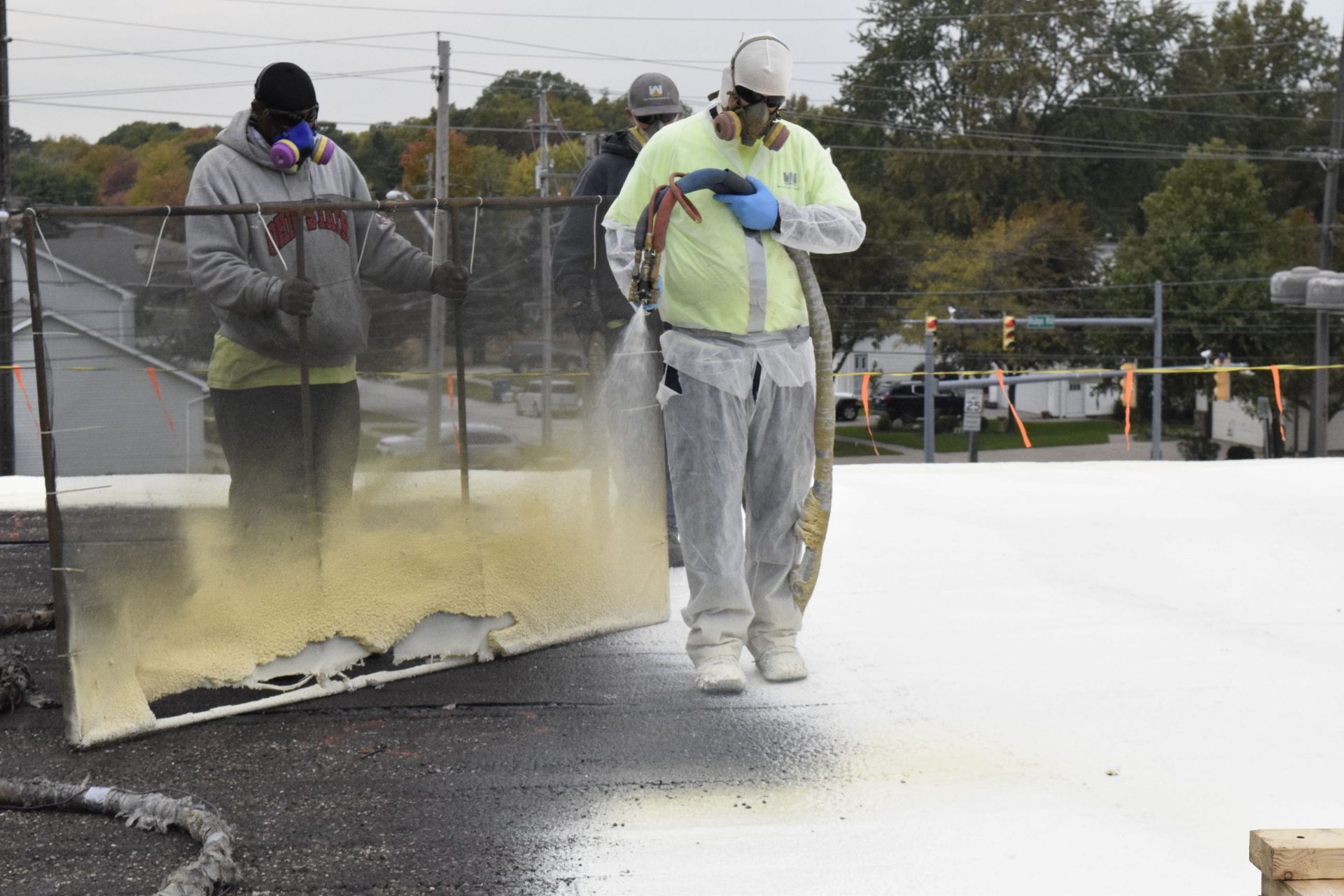
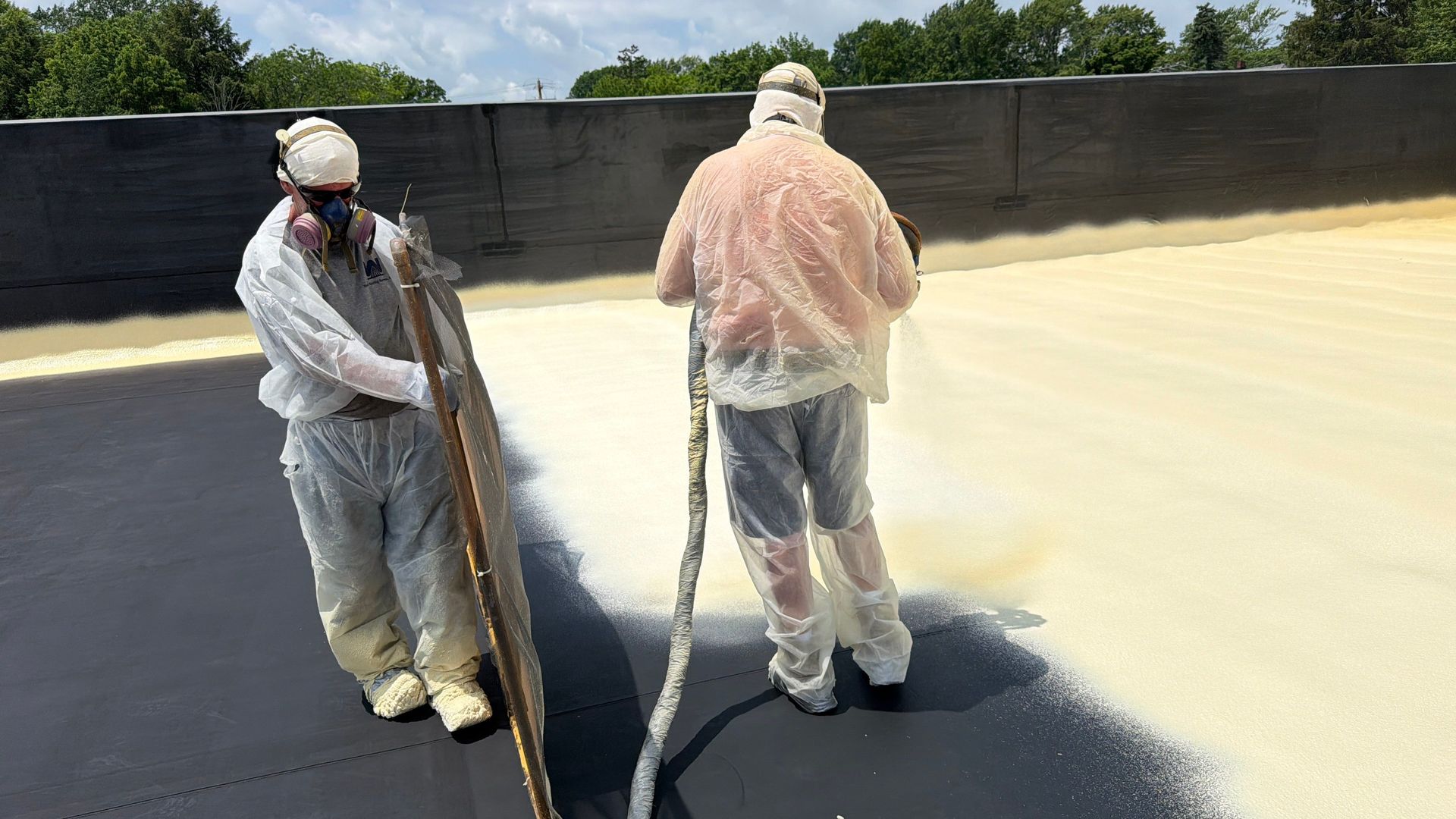
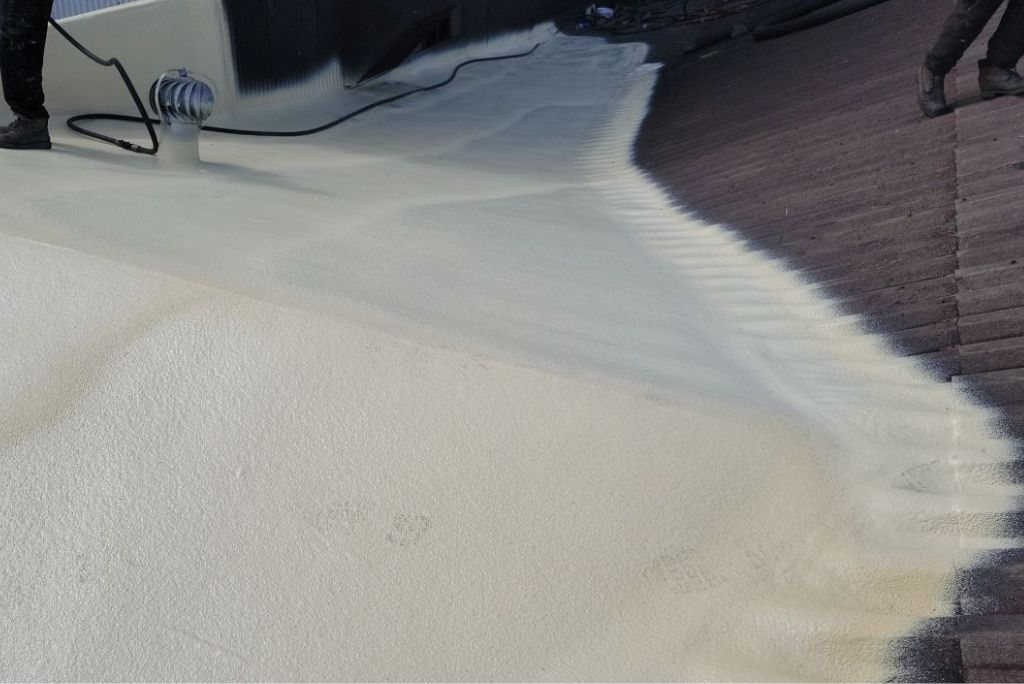
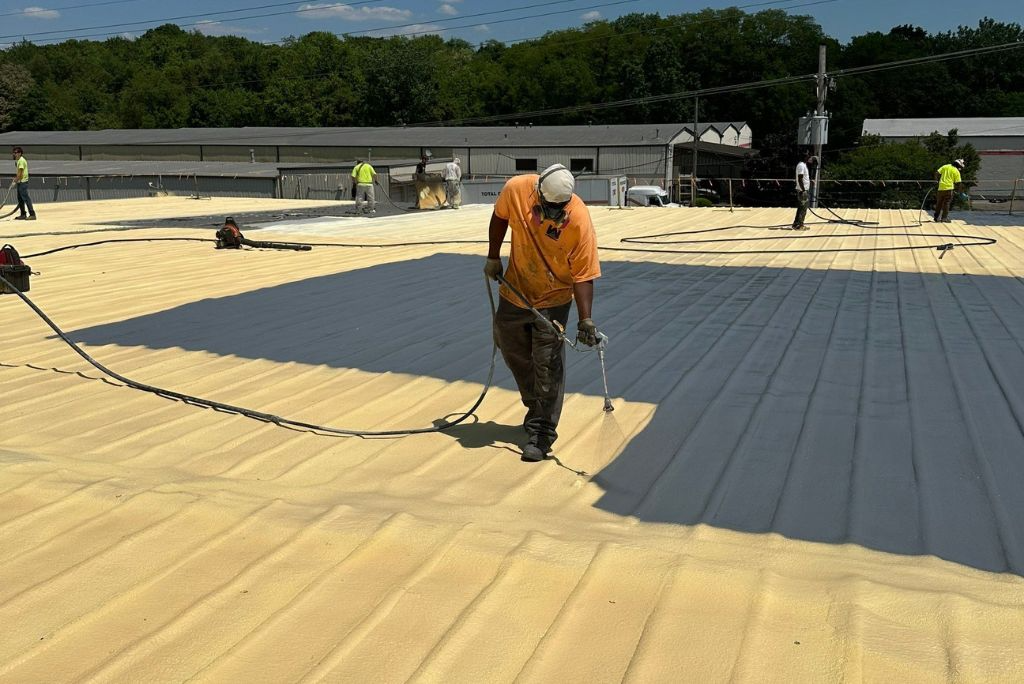
A spray polyurethane foam roof is created by combining two liquid components that react almost instantly after leaving the spray gun. Within seconds, the material expands into a rigid, seamless layer of closed-cell insulation.
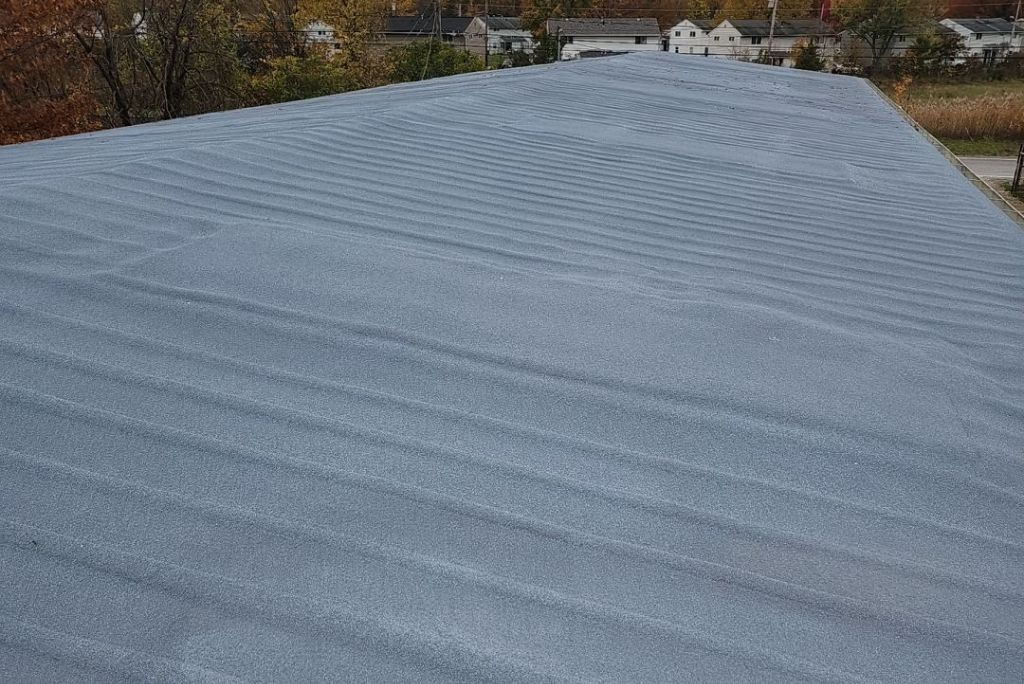
After the foam has cured, installers apply a protective silicone or acrylic coating over the surface. That coating shields the foam from sunlight, weather, and everyday wear.
The finished roof consists of three primary components:
- The existing roof (when restoration is possible)
- Spray polyurethane foam
- A protective coating with embedded granules
Unlike sheet roofing systems, spray foam is applied as a liquid. It conforms to every contour of the roof, wrapping around rooftop equipment, curbs, drains, skylights, and penetrations without creating seams.
One of the biggest advantages of spray foam is that it serves two purposes at once:
- It becomes the waterproof roofing membrane.
- It adds insulation that can significantly improve your building's energy efficiency.
What Is a TPO Roofing System?
TPO stands for Thermoplastic Polyolefin, a single-ply roofing membrane commonly installed on commercial buildings throughout the United States.
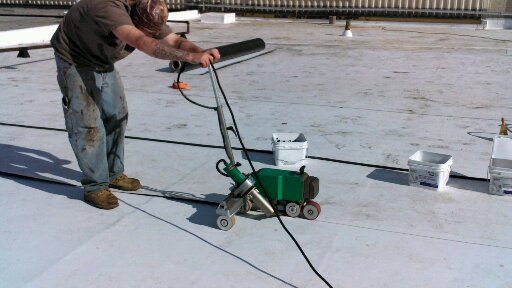
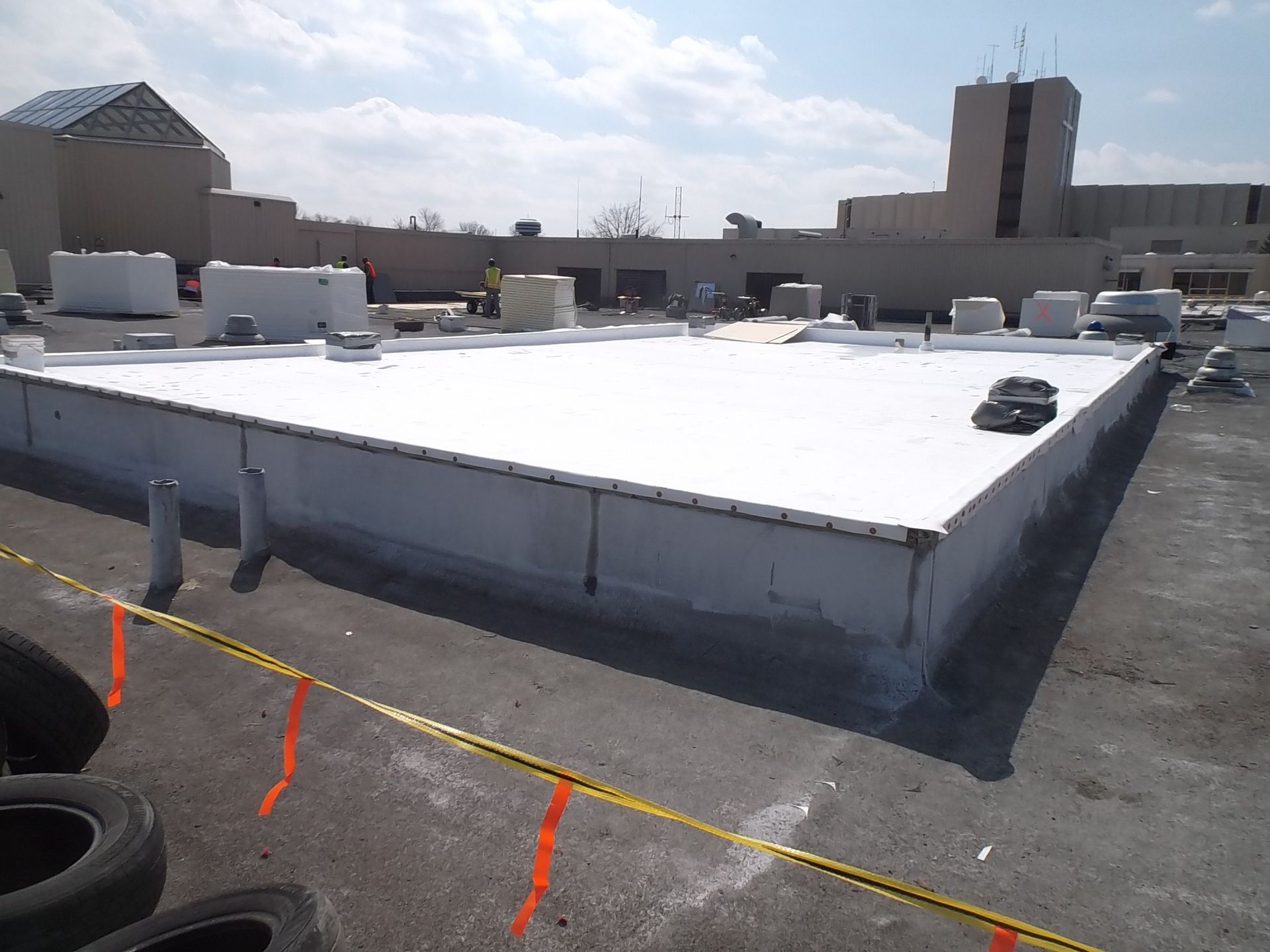
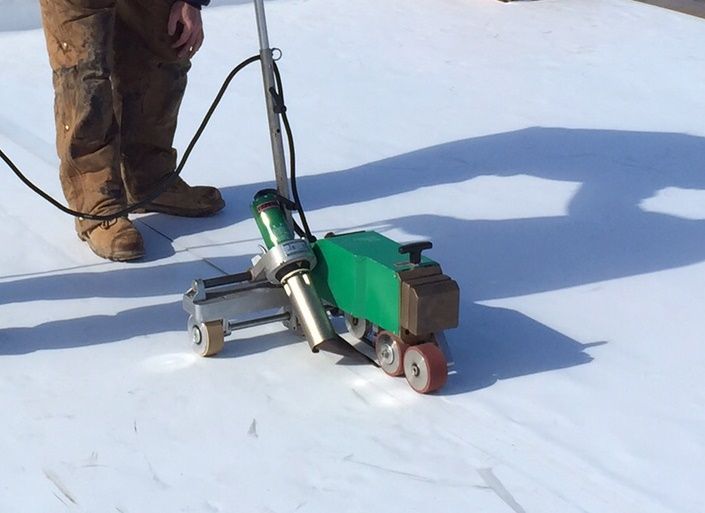
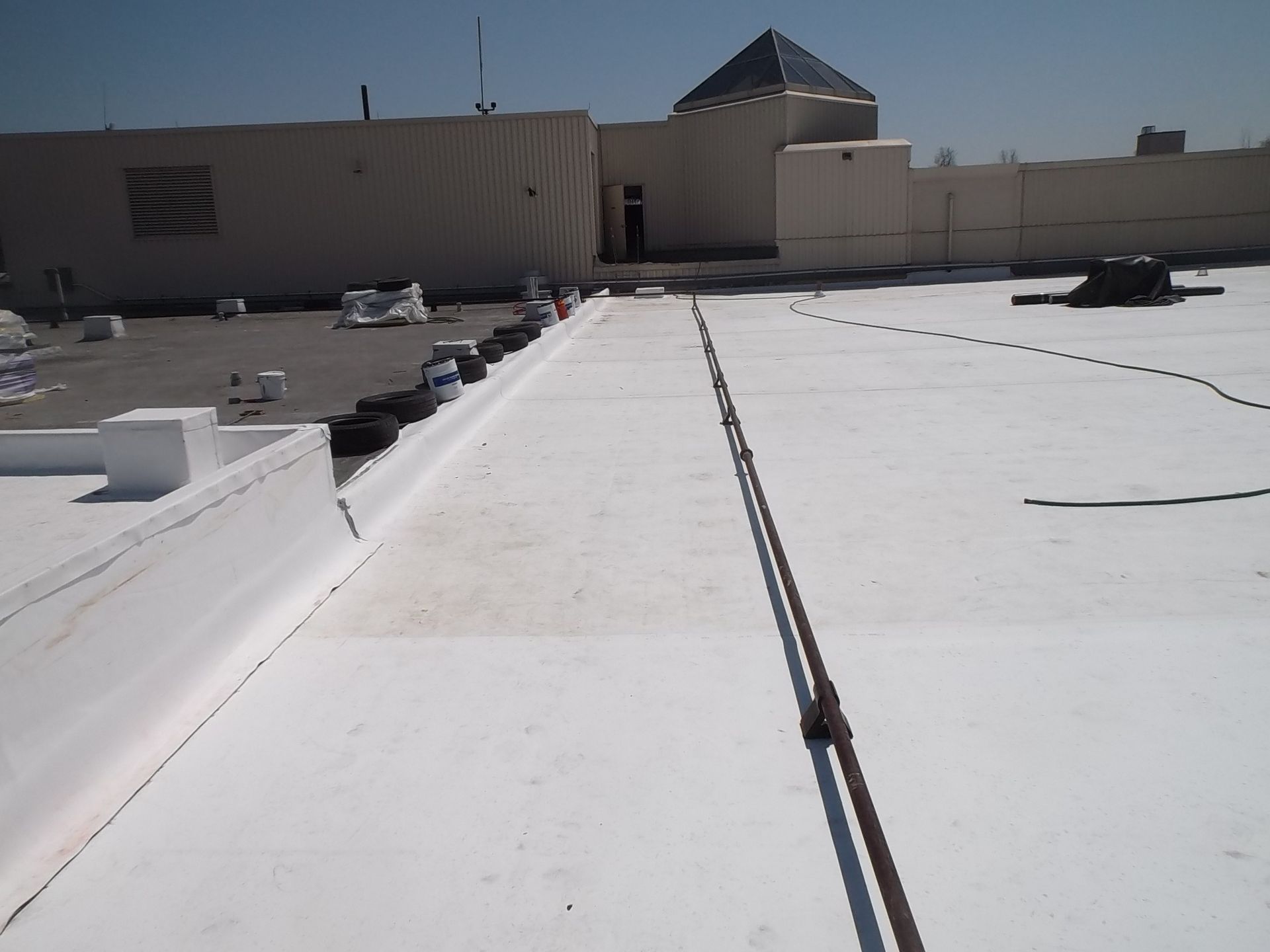
Instead of being sprayed into place, TPO is manufactured in large rolls that are installed across the roof surface. The individual sheets are joined together using heat-welded seams to create a continuous waterproof membrane.
A typical TPO roofing assembly may include:
- Roof deck
- Insulation boards
- Cover board (optional)
- TPO membrane
- Heat-welded seams
- Mechanical fasteners or adhesive attachment
TPO has become one of the most popular commercial roofing systems because it's durable, reflective, relatively lightweight, and widely available.
When properly installed, welded seams create a strong bond between sheets, making TPO a reliable roofing option for many commercial buildings.
Why Would Two Roofing Contractors Recommend Different Roofing Systems?
This is one of the most common questions we hear.
Imagine two roofing contractors inspect the exact same leaking roof.
One recommends spray foam.
The other recommends TPO.
Does that mean one of them is wrong?
Not necessarily.
Experienced roofing contractors often evaluate buildings differently because they're looking at different priorities.
One contractor may focus on:
- Lowest initial investment
- Manufacturer preferences
- Existing specifications
- Familiar installation methods
Another contractor may focus on:
- Long-term ownership costs
- Energy savings
- Eliminating future tear-offs
- Improving drainage
- Restoring the existing roof instead of replacing it
Neither approach is automatically wrong.
The important thing is understanding why a contractor is recommending a particular system and whether that recommendation aligns with your goals.
For example, if you're planning to own your building for the next 25 years, your priorities may be very different than someone planning to sell the property in three years.
Likewise, a manufacturing facility with high energy costs may place far more value on insulation than a warehouse that is rarely heated or cooled.
The best roofing system isn't simply the one with the lowest price—it's the one that solves the problems that matter most to you.
Spray Foam vs. TPO Cost: Which Roofing System Costs Less?
For many building owners, this is the first question.
Unfortunately, it's also one of the hardest to answer with a single number because every commercial roof is different.
Factors like roof size, existing roof condition, insulation needs, rooftop equipment, warranty length, and labor requirements all influence the final price.
In general, however, spray foam roofing systems and TPO roofing systems often fall within a similar price range when comparing projects of similar scope.
That surprises many people.
There's a common misconception that spray foam is significantly more expensive than TPO. In reality, the difference is often much smaller than building owners expect.
The more important question isn't:
"Which roof costs less today?"
It's:
"Which roof will cost less over the next 30 or 40 years?"
Those are two very different conversations.
Looking Beyond the Initial Price
Imagine two buildings that each need a new roof today.
Building A installs a TPO roofing system.
Building B installs a spray foam roofing system.
Twenty years later, both roofs have reached the end of their warranty period.
The owner of the TPO roof will often be planning for another roof replacement. Depending on the condition of the roof assembly, that may involve removing the existing membrane, disposing of materials, and installing an entirely new roofing system.
The owner of the spray foam roof may have a different option.
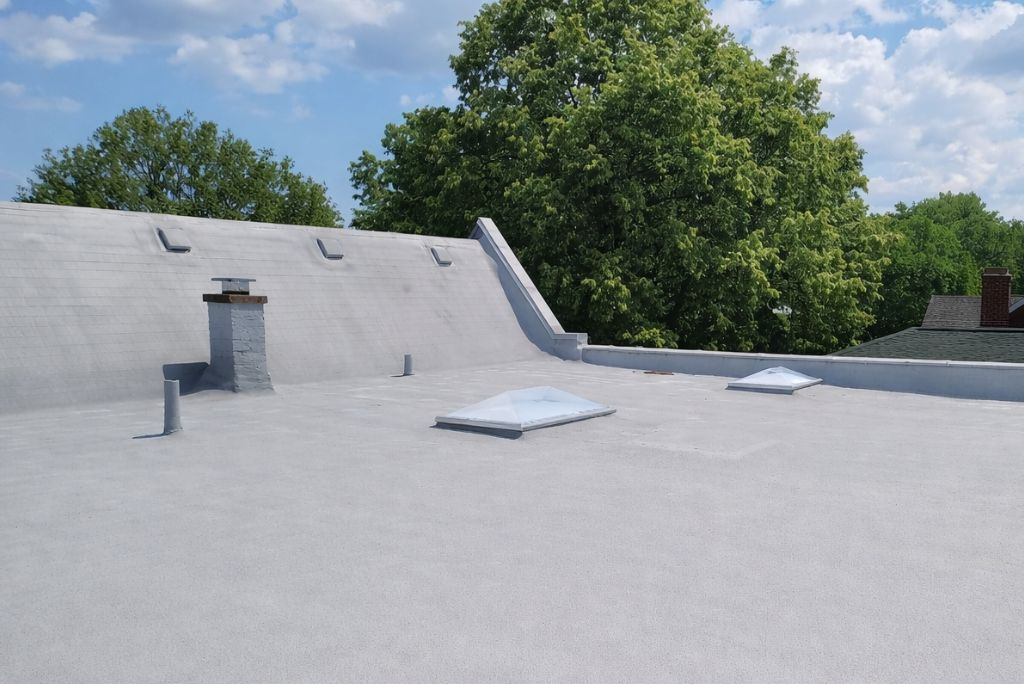
If the underlying foam remains in good condition—which is common with proper maintenance—the existing foam can often stay in place. Instead of replacing the roof, the protective coating is cleaned, repaired where needed, and a new coating is applied.
This process is called a roof recoat.
Rather than paying for another complete roofing system, the owner is renewing the waterproof surface while preserving the insulation that was installed years earlier.
Over several decades, this difference can have a significant impact on total ownership costs.
That's one of the reasons many building owners look beyond the initial installation price and instead compare the life-cycle cost of each roofing system.
We'll discuss roof longevity and renewable roofing systems in more detail later in this guide.
Which Roofing System Is Less Likely to Leak?
If you're reading this article because your commercial roof is currently leaking, this may be the most important section.
After all, the primary job of any roofing system is to keep water out of your building.
Both spray foam and TPO are capable of providing decades of leak-free performance when they're installed correctly and properly maintained. However, they achieve waterproofing in very different ways, and understanding those differences can help you make a more informed decision.
How a TPO Roof Prevents Leaks
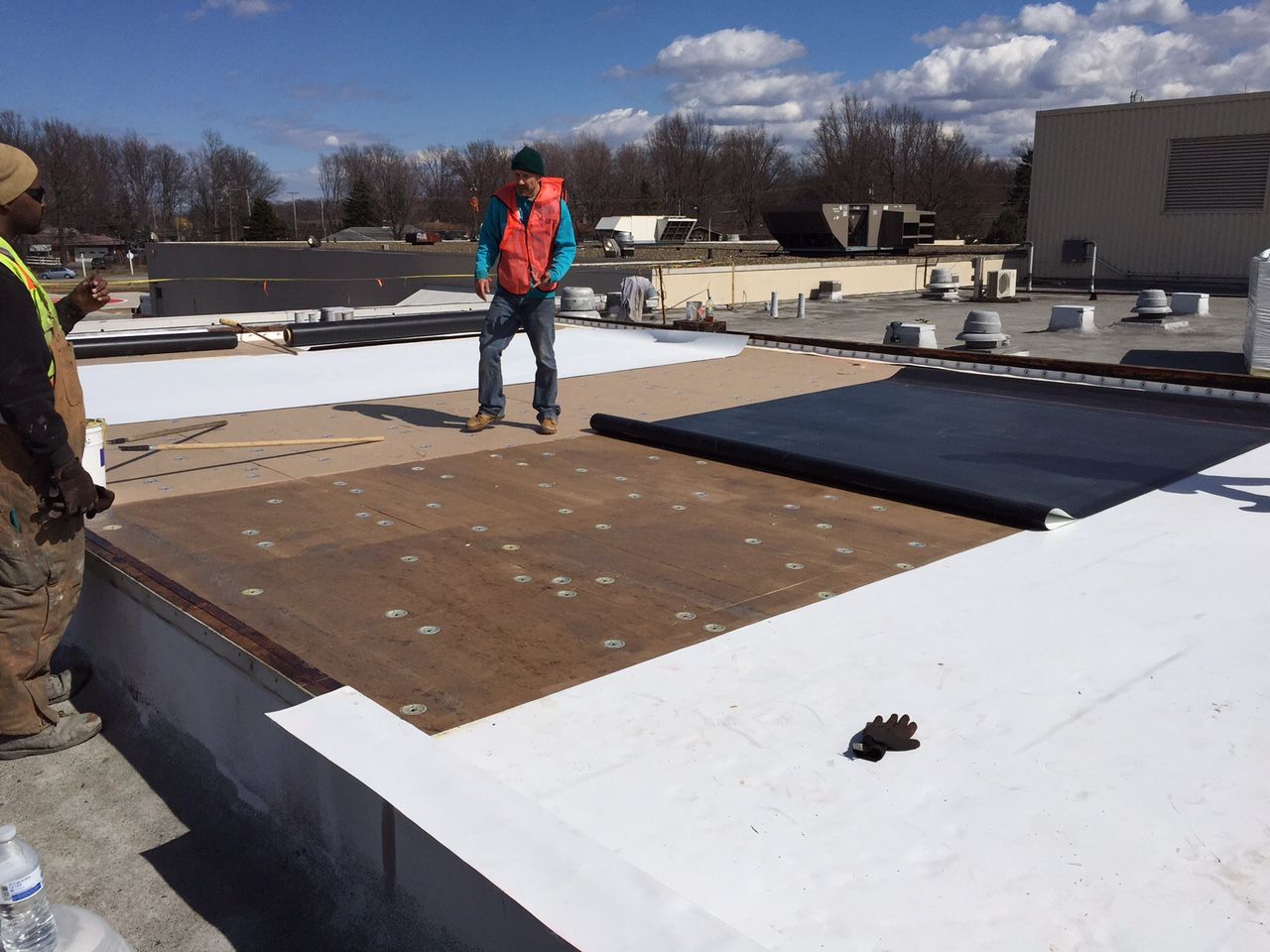
A TPO roof is made up of large sheets of membrane that are rolled out across the roof and joined together with heat-welded seams.
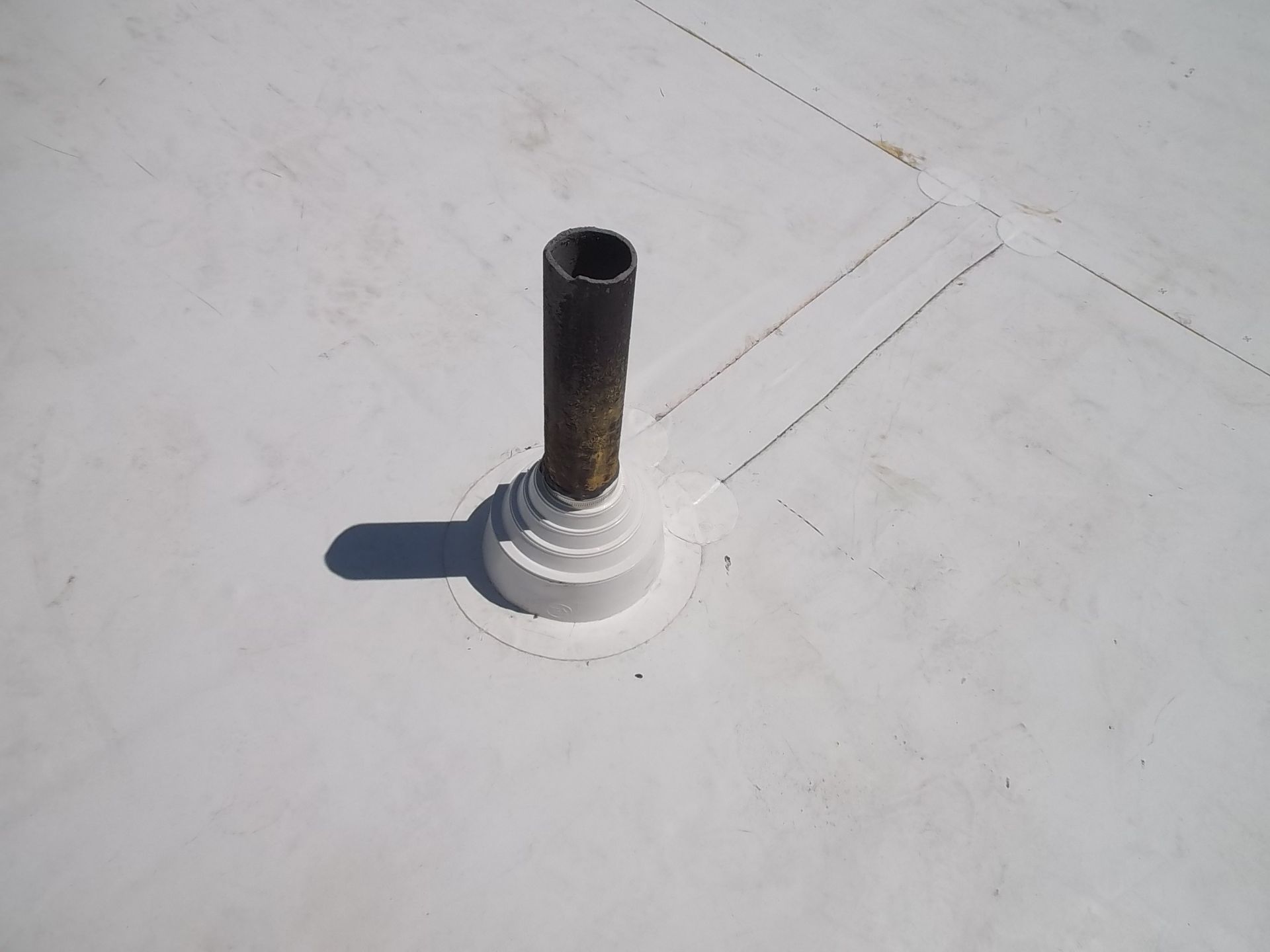
When installed correctly, these seams create a watertight bond that is often stronger than the membrane itself. Around rooftop penetrations—such as HVAC units, vents, skylights, drains, and pipes—installers use prefabricated boots, flashing, and additional welded membrane to keep water from entering.
A professionally installed TPO roof can perform extremely well for many years.
However, because it is assembled from individual sheets, there are naturally more areas that require careful workmanship. Every seam, flashing detail, curb, penetration, and edge detail must be installed correctly to ensure the roof remains watertight.
If leaks develop over time, they commonly occur because of:
- Failed or damaged seams
- Punctures from foot traffic or dropped tools
- Flashing deterioration around rooftop equipment
- Damage from severe weather
- Improper installation
- Lack of routine maintenance
It's important to note that these issues are not unique to TPO. Every roofing system has areas that require inspection and maintenance throughout its life.
How a Spray Foam Roof Prevents Leaks
Spray polyurethane foam approaches waterproofing in a completely different way.
Instead of installing rolls of membrane, the roofing material is sprayed directly onto the roof as a liquid. Within seconds, it expands into a continuous layer of closed-cell foam.
Once cured, a protective silicone coating is applied over the foam.
Because the foam is sprayed in place, the finished roofing system has no field seams.
Rather than cutting and fitting membrane around rooftop equipment, the foam simply conforms to every penetration, curb, drain, pipe, skylight, and transition.
This creates one continuous roofing surface across the entire building.
That seamless design eliminates one of the most common areas where many roofing systems eventually experience problems.
Of course, that doesn't mean a spray foam roof can never leak.
Leaks may occur if:
- The protective coating wears away over many years without being renewed
- The foam is physically damaged and left unrepaired
- Severe weather damages the roof
- The original installation was performed improperly
Like any commercial roof, spray foam still benefits from regular inspections and preventative maintenance.
Does "Seamless" Really Matter?
One of the biggest selling points of spray foam roofing is that it's seamless.
But what does that actually mean for a building owner?
Think about it this way.
Imagine placing a waterproof tarp over your backyard.
If the tarp is one continuous piece, there are very few opportunities for water to work its way underneath.
Now imagine creating that same tarp using dozens of smaller pieces taped together.
Even if every connection is done correctly, you've created many more places that require long-term performance.
The same principle applies to commercial roofing.
Large commercial buildings may contain thousands of linear feet of seams, depending on the roof size and layout.
Those seams are professionally welded during installation and are designed to last for many years. However, they still become part of the roof that should be inspected throughout its service life.
Because spray foam eliminates those field seams entirely, many building owners appreciate the simplicity of a monolithic roofing surface.
Which Roof Is Easier to Repair?
Eventually, every commercial roof requires repairs.
Storm damage happens.
Maintenance workers accidentally drop tools.
Contractors install new rooftop equipment.
Tree branches fall.
The question isn't whether repairs will ever be needed—it's how difficult those repairs are when they become necessary.
Repairing a TPO Roof
When damage occurs to a TPO roof, technicians typically locate the affected area and install a welded repair patch or replace damaged membrane sections.
If moisture has entered beneath the membrane, additional investigation may be needed to determine how far the water traveled before repairs can begin.
Most TPO repairs are straightforward for experienced commercial roofing contractors.
However, repairs usually require specialized welding equipment and technicians trained in TPO installation.
Repairing a Spray Foam Roof
Spray foam repairs are often relatively simple.
If damage occurs, the affected area can usually be cleaned, repaired with compatible spray foam or sealant, and recoated to restore the waterproof surface.
Because the roofing system is seamless, repairs can often blend into the existing roof without introducing additional seams or large replacement sections.
In many cases, routine repairs can be completed quickly, helping extend the life of the roofing system.
What Happens If Water Gets Under the Roof?
This is another important difference between the two systems.
Spray polyurethane foam is made up of closed cells.
Think of the foam as millions of tiny sealed bubbles.
If one area of the roof becomes damaged, water generally remains confined to the immediate area because the individual cells limit how far moisture can travel through the foam.
This characteristic often makes leak investigations more straightforward.
TPO roofing systems rely on insulation boards beneath the membrane.
If water finds its way beneath the membrane through a puncture or flashing issue, moisture can sometimes migrate between insulation boards before the leak becomes visible inside the building.
That doesn't mean TPO leaks are difficult to repair—but it can occasionally make locating the original point of entry more challenging.

Which Roofing System Is More Energy Efficient?
For many commercial buildings, the roof isn't just protection from the weather.
It's also one of the largest opportunities to reduce heating and cooling costs.
This is where spray foam and TPO begin to separate.
TPO Reflects Heat
One reason TPO has become so popular is its highly reflective white surface.
Rather than absorbing large amounts of sunlight, white TPO reflects much of the sun's energy back into the atmosphere.
That reflective surface helps reduce rooftop temperatures during hot summer months.
For buildings in warm climates—or facilities with significant air conditioning loads—this can contribute to lower cooling costs compared to darker roofing materials.
Many building owners choose white TPO specifically because of its solar reflectivity.
Spray Foam Reflects Heat and Adds Insulation
Spray foam roofs also use highly reflective coatings.
However, spray foam offers something TPO alone does not.
Insulation.
Closed-cell spray polyurethane foam has an insulating value of approximately R-6.5 per inch, making it one of the highest-performing roofing insulation materials available.
That added insulation helps reduce heat transfer through the roof year-round.
In the summer, less heat enters the building.
In the winter, less conditioned air escapes.
For buildings with limited roof insulation—or facilities with high heating and cooling costs—this added thermal performance can produce meaningful energy savings over time.
Air Sealing: An Often Overlooked Advantage
Most building owners think only about insulation.
But insulation is only part of the equation.
Air movement also affects energy efficiency.
Because spray foam expands as it's applied, it fills small gaps, cracks, and irregularities across the roof surface.
This creates an additional air barrier that helps reduce uncontrolled air movement through the roof assembly.
Reducing air leakage can improve indoor comfort while allowing HVAC systems to operate more efficiently.
TPO roofing systems do not provide this same air-sealing benefit on their own.
Which Roof Performs Better Over Time?
Both roofing systems can provide decades of reliable service when properly installed and maintained.
The difference is often found in how they age.
TPO membranes gradually weather through exposure to sunlight, temperature changes, and everyday environmental conditions.
Spray foam's waterproofing layer—the protective coating—is also exposed to the elements.
However, unlike replacing an entire roofing system, the coating can often be renewed before significant deterioration occurs.
That distinction becomes especially important when considering the total cost of ownership over several decades.
In the next section, we'll take a closer look at roof lifespan, renewable roofing systems, ponding water, maintenance requirements, and the situations where we would actually recommend a TPO roof over spray foam.
How Long Does a Spray Foam Roof Last Compared to a TPO Roof?
One of the biggest misconceptions in commercial roofing is that every roof eventually has to be torn off and replaced.
That isn't always true.
The expected lifespan of a roofing system depends on several factors, including:
- Installation quality
- Weather exposure
- Building usage
- Preventative maintenance
- How quickly repairs are made when damage occurs
Both TPO and spray foam roofing systems can provide decades of reliable protection, but they reach that longevity in different ways.
The Lifespan of a TPO Roof
A professionally installed TPO roofing system typically lasts 20 to 30 years, although actual performance depends on the membrane thickness, installation quality, climate, and maintenance history.
Throughout its life, the roof should be inspected regularly to identify punctures, flashing issues, or seam damage before they become leaks.
Eventually, every TPO roof reaches the point where repairs are no longer the most economical solution. At that stage, many building owners begin planning for a roof replacement.
That doesn't mean the roof failed—it simply reached the end of its expected service life.
The Lifespan of a Spray Foam Roof
Spray polyurethane foam works a little differently.
The foam itself doesn't usually wear out.
Instead, it's the protective coating on top of the foam that gradually weathers from years of exposure to sunlight and the elements.
As the coating approaches the end of its service life, it can often be cleaned, repaired where necessary, and recoated with a new layer of protective coating.
The existing foam remains in place.
If inspections are performed regularly and recoats are completed when needed, a spray foam roof can continue performing for decades without requiring a complete tear-off.
That renewable characteristic is one of the reasons many long-term building owners choose spray foam roofing systems.
Understanding Renewable Roofing Systems
Think of a spray foam roof like maintaining the exterior paint on your home.
You don't replace the entire house because the paint has weathered.
You prepare the surface and apply a new protective coating.
A spray foam roof follows a similar concept.
Instead of removing and replacing the entire roofing assembly every few decades, the waterproof coating can often be renewed while preserving the existing insulation underneath.
Of course, not every spray foam roof automatically qualifies for a recoat.
The foam must still be in good condition, and regular inspections and maintenance play an important role in making that possible.
Which Roofing System Handles Ponding Water Better?
Ponding water is one of the most common problems found on commercial roofs.
It occurs when water remains on the roof for more than 48 hours after a rainfall instead of draining away.
Standing water can increase the amount of time a roof remains wet, add unnecessary weight to the structure, and highlight areas where drainage needs improvement.
If your current roof has ponding water, this section deserves your attention.
How TPO Handles Ponding Water
Modern TPO membranes are designed to resist standing water better than many older roofing materials.
When installed properly, a TPO roof can perform well even if temporary ponding occurs.
However, the membrane itself doesn't solve the drainage problem.
If water consistently collects in the same locations, the roof's slope or drainage system may still need to be improved.
In some situations, tapered insulation can be installed beneath a TPO roof to help direct water toward drains.
How Spray Foam Can Improve Drainage
This is one area where spray foam has a unique advantage.
Because spray foam is applied as a liquid and expands as it's installed, experienced installers can build positive slope into areas where water has historically collected.
Instead of simply covering the low spot, they can gradually raise sections of the roof to encourage water to flow toward existing drains, scuppers, or gutters.
This process is often called corrective slope or positive drainage.
Not every drainage issue can be solved this way, but many ponding water problems can be significantly improved without replacing the roof deck.
For buildings that have struggled with standing water for years, this capability can be a major benefit.
Which Roofing System Requires More Maintenance?
Here's something every building owner should know:
No commercial roof is maintenance-free.
Regardless of which roofing system you choose, annual inspections and routine maintenance are some of the best investments you can make.
Small issues are almost always less expensive to fix than major leaks.
Maintaining a TPO Roof
Routine TPO maintenance typically includes:
- Inspecting seams
- Examining flashing details
- Looking for punctures
- Cleaning drains
- Removing debris
- Repairing damaged membrane areas
These inspections help identify small problems before they become expensive interior leaks.
Maintaining a Spray Foam Roof
Spray foam maintenance is similar in many ways.
Technicians inspect:
- The protective coating
- Areas of mechanical damage
- Sealants around penetrations
- Drainage patterns
- Rooftop traffic areas
If portions of the protective coating have worn thin, they can often be restored before the foam underneath becomes exposed.
Routine maintenance helps maximize the life of both roofing systems.
Which Roofing System Is Better for Buildings With Lots of Rooftop Equipment?
Take a look at your roof.
Do you have:
- HVAC units?
- Exhaust fans?
- Skylights?
- Pipes?
- Electrical conduit?
- Satellite equipment?
- Solar panels?
Every rooftop penetration creates another area that must remain watertight.
TPO Around Rooftop Penetrations
TPO systems use flashing materials, boots, and welded membrane to seal around each rooftop penetration.
When installed properly, these details perform very well.
However, every penetration requires additional labor and additional waterproofing details.
As the number of rooftop units increases, so does the complexity of the installation.
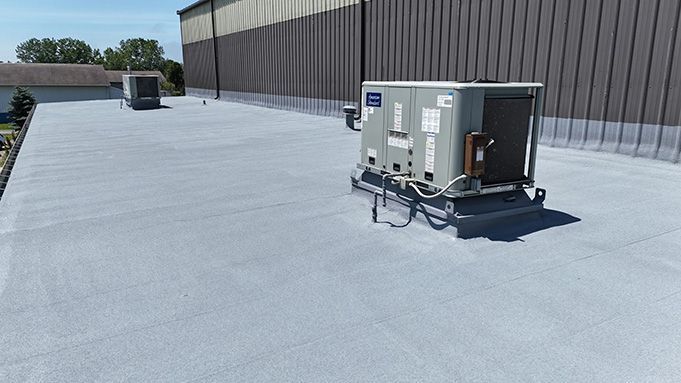
Spray Foam Around Rooftop Penetrations
Spray foam naturally conforms around rooftop equipment.
Instead of cutting membrane pieces to fit every curb or pipe, the foam expands tightly around those irregular shapes before receiving its protective coating.
Buildings with numerous penetrations often benefit from this seamless application process.
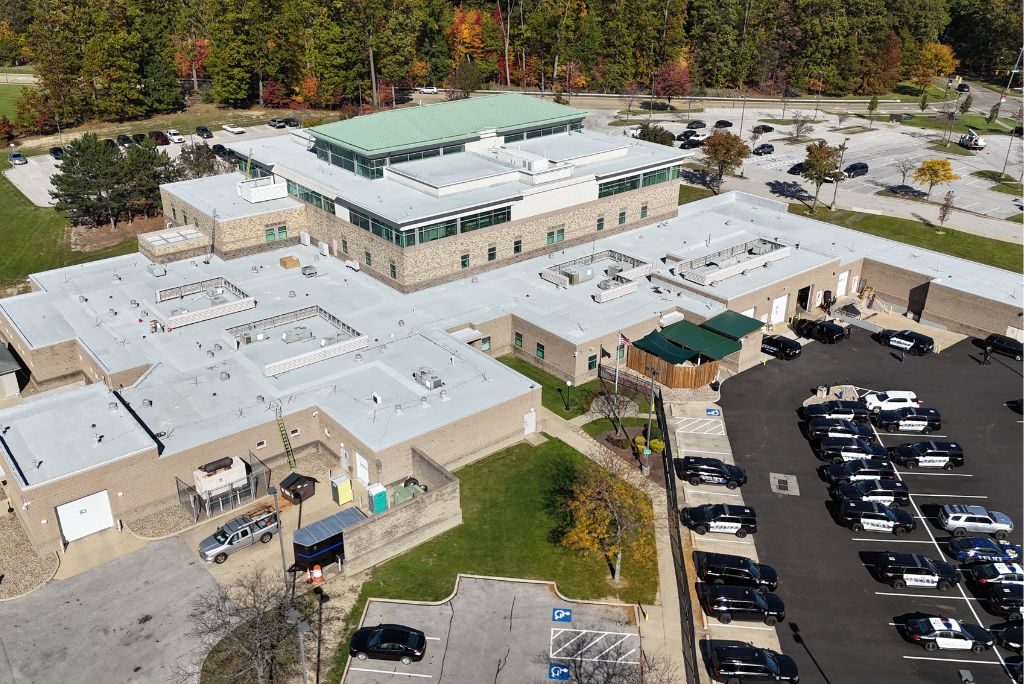
It's one of the reasons spray foam is commonly selected for manufacturing facilities, schools, hospitals, and industrial buildings that have extensive rooftop mechanical equipment.
When We Would Recommend a TPO Roof Instead of Spray Foam
Since we install spray foam roofing systems, you might assume we'd recommend it for every building.
We don't.
There are situations where we genuinely believe a TPO roof is the better solution.
For example, we may recommend TPO if:
- The project is new construction with a roofing specification already calling for TPO.
- The building experiences constant heavy foot traffic from maintenance personnel.
- The owner prefers a traditional single-ply roofing system.
- Existing building conditions make spray foam an unsuitable option.
- The owner's primary goal is obtaining a new roofing system with a lower emphasis on energy savings or renewable restoration.
Every building is different.
Our responsibility is to recommend the roofing system that best fits your building—not simply the one we install most often.
When We Believe Spray Foam Is the Better Choice
There are also situations where spray foam offers clear advantages.
We often recommend spray foam when a building owner wants to:
- Avoid a costly tear-off whenever possible.
- Increase insulation and reduce energy costs.
- Eliminate thousands of linear feet of field seams.
- Improve drainage in areas with chronic ponding water.
- Restore an existing roof instead of replacing it.
- Extend the life of their roofing investment through future recoats.
- Create a seamless roofing system around numerous rooftop penetrations.
For many existing commercial buildings, these benefits make spray foam one of the most cost-effective long-term roofing solutions available.
The key is determining whether your particular building is a good candidate.
There is no roofing system that's perfect for every situation.
Questions Every Building Owner Should Ask Before Choosing a Roofing System
Choosing a new commercial roofing system is a major decision.
A roof protects your building, equipment, inventory, employees, and everything inside your facility. It also represents a significant investment, so it's important to look beyond the initial proposal price and understand exactly what you are getting.
Before signing a contract, we recommend asking every roofing contractor the following questions.
1. Why Are You Recommending This Roofing System for My Building?
A good roofing contractor should be able to explain why they are recommending a specific system—not just tell you what system they install.
Ask questions like:
- What makes this roofing system a good fit for my building?
- What problems with my existing roof does this system solve?
- Are there any concerns with my current roof that need to be addressed first?
- Are you recommending this system because it is the best option or because it is the system your company prefers to install?
The best contractors don't simply sell roofing systems. They evaluate buildings and recommend solutions.
2. What Problems With My Existing Roof Will This System Solve?
Every commercial roof has different challenges.
One building may have:
- Frequent leaks
- Poor drainage
- Aging insulation
- Multiple rooftop penetrations
- Previous repair attempts
- High heating and cooling costs
Another building may simply need a durable, cost-effective replacement.
The right roofing system should address the specific problems your building is experiencing.
For example:
- If your building struggles with energy costs, additional insulation may be a major consideration.
- If your roof has chronic ponding water, drainage improvements may be important.
- If your roof has numerous seams and penetrations, a seamless roofing system may provide advantages.
- If your building has heavy rooftop traffic, durability and access may be higher priorities.
A roofing recommendation should be based on your building—not just a product brochure.
3. What Maintenance Will This Roof Require Over the Next 20 Years?
Many building owners focus heavily on installation costs but don't ask enough questions about what happens after installation.
Every commercial roofing system requires maintenance.
Ask your contractor:
- How often should this roof be inspected?
- What maintenance tasks should be performed?
- What problems should we watch for?
- What happens if damage occurs?
- How can we maximize the lifespan of this roof?
A proactive maintenance plan can help identify small problems before they become expensive repairs.
4. What Happens When the Warranty Expires?
A roofing warranty is important, but it's only one part of the decision.
Many building owners focus on whether they are getting a 10-year, 15-year, or 20-year warranty without asking what happens afterward.
Consider asking:
- Can the roof be repaired or renewed?
- Will the entire system need to be replaced?
- What are the expected costs after the warranty period?
- What maintenance is required to extend the roof's service life?
Understanding the long-term plan for your roof is just as important as understanding the initial installation.
5. What Are the Disadvantages of This Roofing System?
This may be the most important question you can ask.
Every roofing system has advantages.
Every roofing system also has limitations.
A contractor who refuses to discuss the disadvantages of their recommended system may not be giving you the complete picture.
For example:
Spray foam roofing offers excellent insulation, seamless waterproofing, and renewable life cycles—but it may not be the ideal choice for every building, especially those requiring constant heavy rooftop traffic.
TPO roofing offers durability, proven performance, and excellent walkability—but it relies on properly installed seams and does not provide the same insulation benefits as a spray foam system.
The right roofing decision comes from understanding both the benefits and limitations of each option.
Frequently Asked Questions About Spray Foam vs. TPO Roofing
Is spray foam roofing more expensive than TPO?
In many cases, spray foam and TPO roofing systems have similar installation costs.
The final price depends on many factors, including roof size, existing roof conditions, insulation requirements, warranty length, and the complexity of the building.
The more important comparison is often the long-term cost of ownership.
A lower initial price does not always mean the lowest overall cost over the life of the roof.
Can spray foam roofing be installed over my existing roof?
In many cases, yes.
One of the biggest advantages of spray foam roofing is that it can often be installed over an existing roof system without a complete tear-off.
However, the existing roof must first be evaluated.
Factors such as moisture, structural conditions, roof deck integrity, and previous repairs all play a role in determining whether a roof is a good candidate for restoration.
Can spray foam roofs leak?
No roofing system is completely immune to damage, but spray foam roofing has a major advantage because it is installed as a seamless membrane.
Since there are no field seams, there are fewer potential areas where water can enter.
If damage does occur, repairs can typically be completed by restoring the affected area and recoating the surface.
Does TPO roofing leak more than spray foam?
Not necessarily.
A properly installed TPO roof can provide excellent protection for many years.
The difference is that TPO relies on welded seams and flashing details to create a waterproof system, while spray foam creates a continuous seamless surface.
Both systems depend heavily on proper installation and regular maintenance.
Which roofing system lasts longer: spray foam or TPO?
Both systems can provide decades of service.
TPO roofs commonly last approximately 20 to 30 years depending on installation quality, environmental conditions, and maintenance.
Spray foam roofs can continue performing beyond their original warranty period because the protective coating can often be renewed without removing the existing foam.
The lifespan of either system depends heavily on how well the roof is maintained.
Is spray foam roofing good for buildings with ponding water?
Spray foam can be an excellent option for buildings with drainage issues because installers can build slope into low areas to help move water toward drains.
However, the cause of the ponding water should always be evaluated first.
Not every drainage issue can be solved with foam alone.
Can TPO be repaired?
Yes.
TPO roofing systems can be repaired by trained roofing professionals using compatible membrane and welding techniques.
Routine inspections can help identify damaged seams, punctures, and flashing issues before they lead to interior leaks.
Which roof is better for energy savings?
Spray foam generally has an advantage because it provides insulation in addition to a reflective coating.
TPO can help reduce heat gain because of its reflective surface, but it does not provide the same insulation value unless additional insulation is installed beneath the membrane.
For buildings with high heating and cooling costs, the added insulation from spray foam may provide significant long-term benefits.
Is spray foam roofing environmentally friendly?
Spray foam roofing can be an environmentally responsible choice because it often allows building owners to restore an existing roof instead of removing it and sending old roofing materials to a landfill.
Additionally, the improved insulation can help reduce energy consumption over the life of the building.
Can contractors walk on a spray foam roof?
Yes, but like any commercial roof, traffic should be managed.
Areas that receive frequent foot traffic can be protected with designated walk pads or pathways.
If your building requires constant rooftop access, discuss those needs with your roofing contractor before selecting a system.
Final Thoughts: Spray Foam vs. TPO Roofing
So, which roofing system is better: spray foam or TPO?
The answer depends on your building.
TPO is an excellent roofing system that has become popular for good reasons. It offers durability, a proven track record, and strong performance when installed correctly.
Spray foam is also an excellent roofing system, especially for existing commercial buildings where energy efficiency, seamless waterproofing, drainage improvements, and long-term restoration are priorities.
The best roofing contractors will take the time to understand your building, explain your options, and help you choose the system that makes the most sense for your situation.
The right question isn't:
"Which roofing system is the best?"
The better question is:
"Which roofing system is the best fit for my building, my budget, and my long-term goals?"
Making that decision with accurate information is the first step toward protecting your building for decades to come.